The main points
- A narrow, shallow tidal channel roughly 600 m long and about 50 to 60 m wide at its narrowest, with strong tidal currents.[1]
- The original cruise from this site runs from Bryggen through the Osterfjord to Mostraumen and is listed at 3.5 hours.[2]
- From US$93 for the Bergen to Mostraumen cruise, with reserve now and pay later.[2]
- Bergen's tide is moderate: about 91 cm mean range and about 123 cm at spring tide.[3]
- Day length in Bergen runs from 7.7 hours at the winter solstice to 23.1 hours at the summer solstice.[4]
- Top choice The Original Fjord Cruise from US$93 Duration3.5 hours[2]GuideAudio guide in English and Norwegian[2]Rating4.69 from 9,652 reviews[2]CancellationFree cancellation up to 24 hours before[2]RouteBryggen, Osterfjord, Mostraumen[2] Check availability
- Operated by Locals from US$88 Duration3.5 hours[5]GuideEnglish-speaking driver[5]Rating4.57 from 4,302 reviews[5]CancellationFree cancellation up to 24 hours before[5]RouteBryggen, Nordhordland Bridge, Osterfjord, Mostraumen[5] See this tour
- Cruise with Live Guide from US$80 Duration3.5 hours[6]GuideLive guide in English[6]Rating4.74 from 2,368 reviews[6]CancellationFree cancellation up to 24 hours before[6]RouteBryggen, Sandviken, Osterfjord, Mostraumen, Modalen[6] See this tour
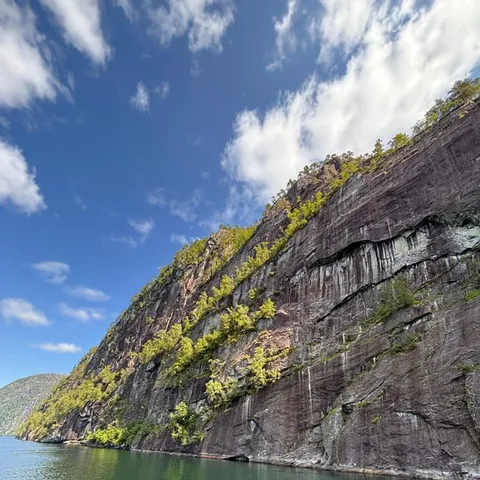
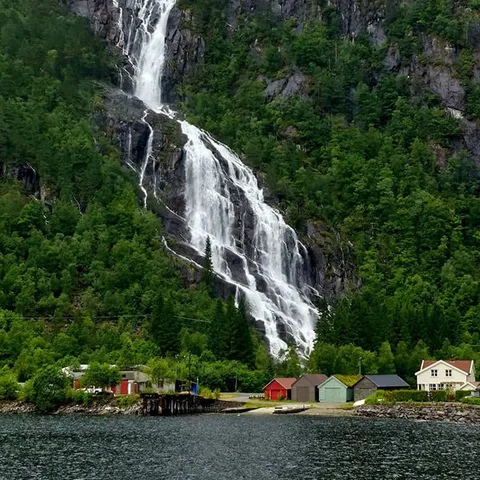
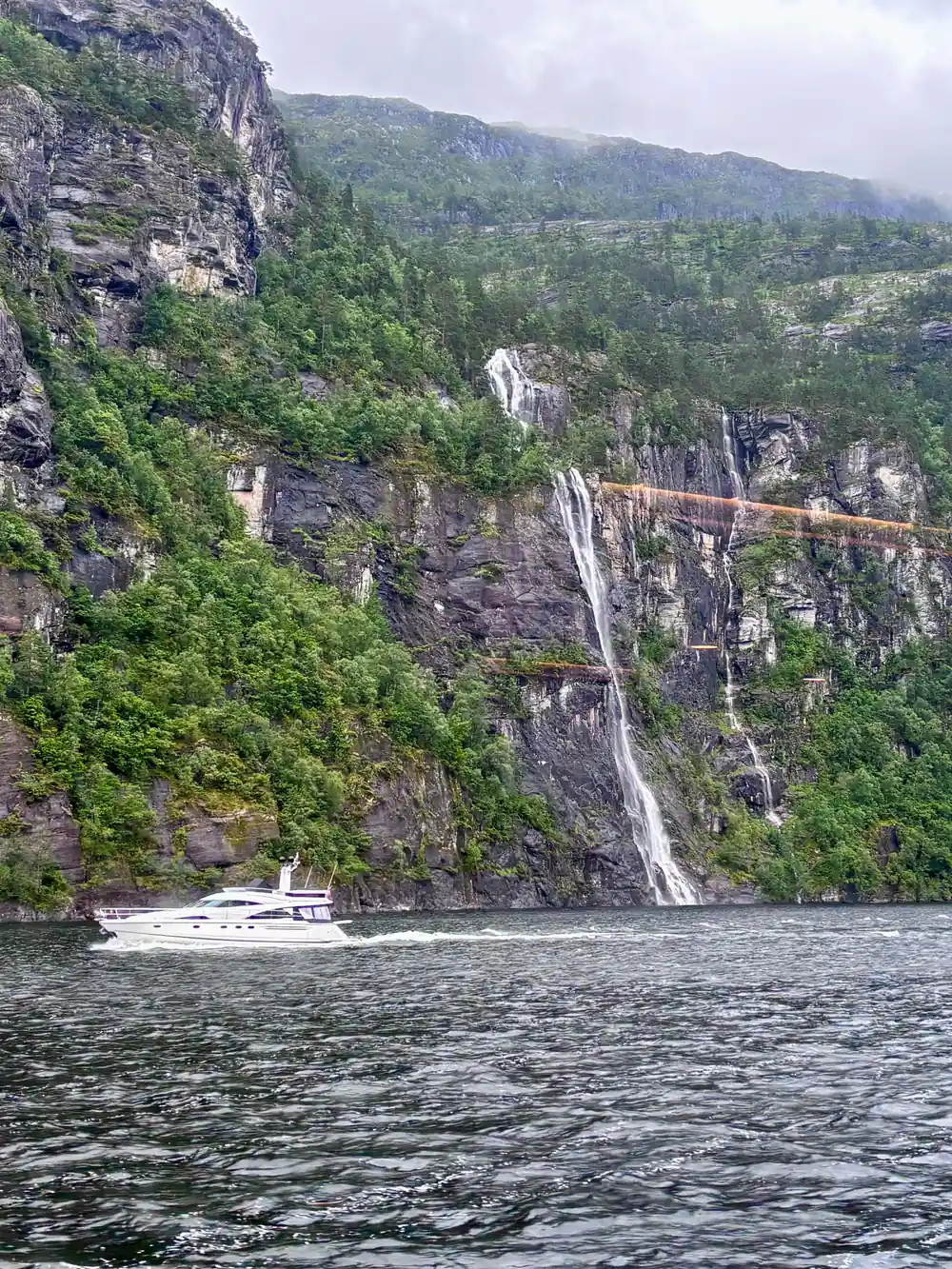
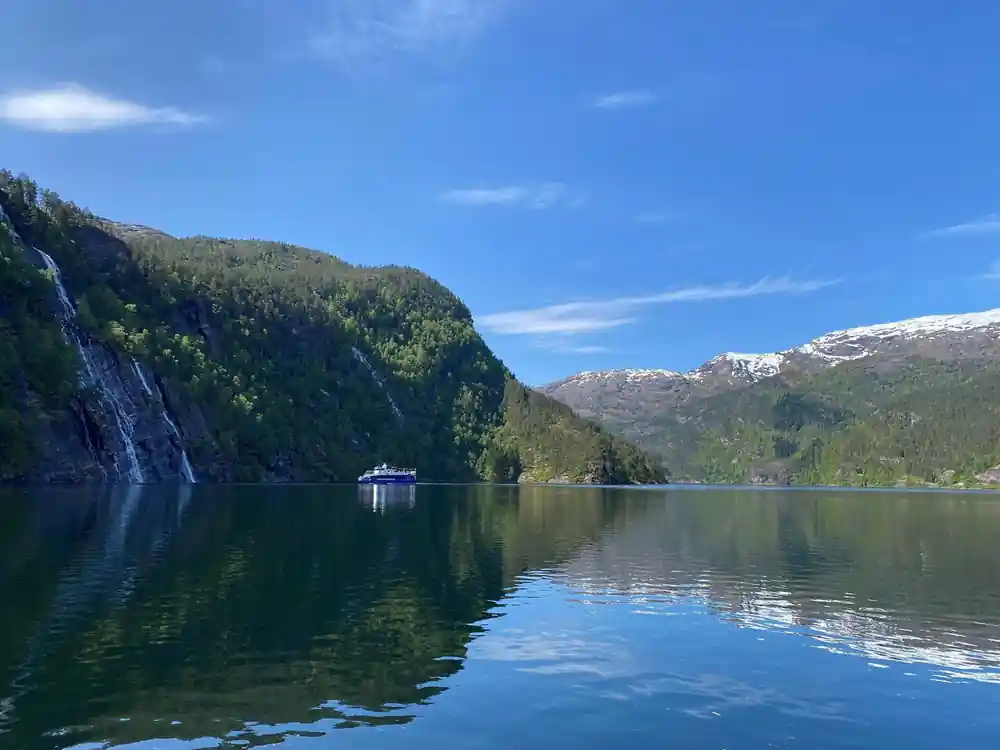
Strong tidal currents run through the strait, and the boat noses up to a waterfall close enough that crew sometimes scoop mountain water in a cup for passengers.
Is the Mostraumen fjord cruise worth it?
Booking tips
- Book the original Mostraumen cruise from Bergen and pick a morning departure
- Compare the short cruises, the RIB safari and the city plus fjord day out
- Reserve now and pay later, so a date is held before you commit
- Check availability for the starting time on your chosen date
On the day
- Spend the strait itself on the open deck, whatever the weather is doing
- Wear a warm mid layer under a waterproof shell, plus shoes with grip
- Boats can be full in high season, so claim a place at the rail early
- Keep phones and hats secure, and hold the rail when the current pushes
Mostraumen: what the name tells you
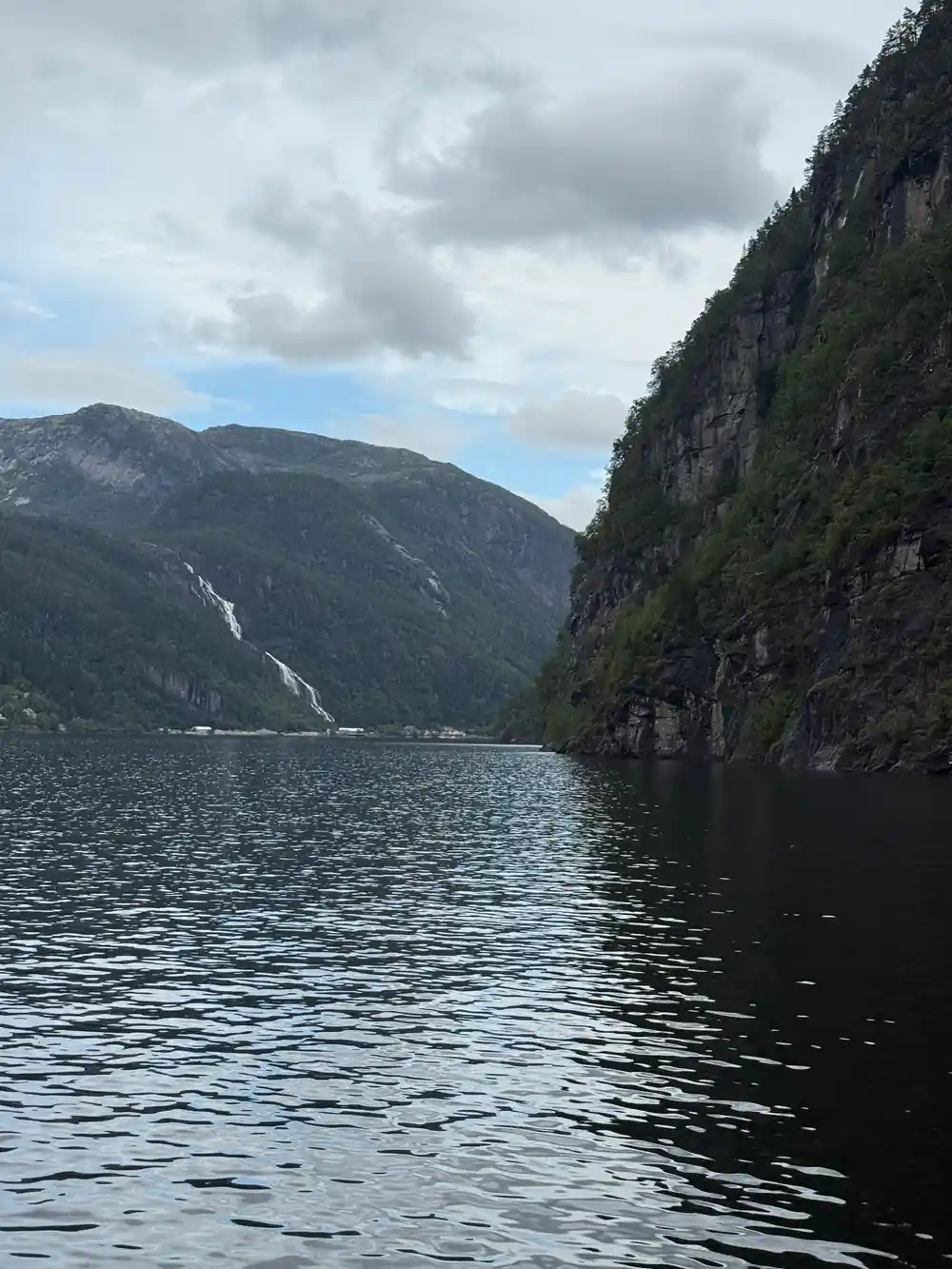
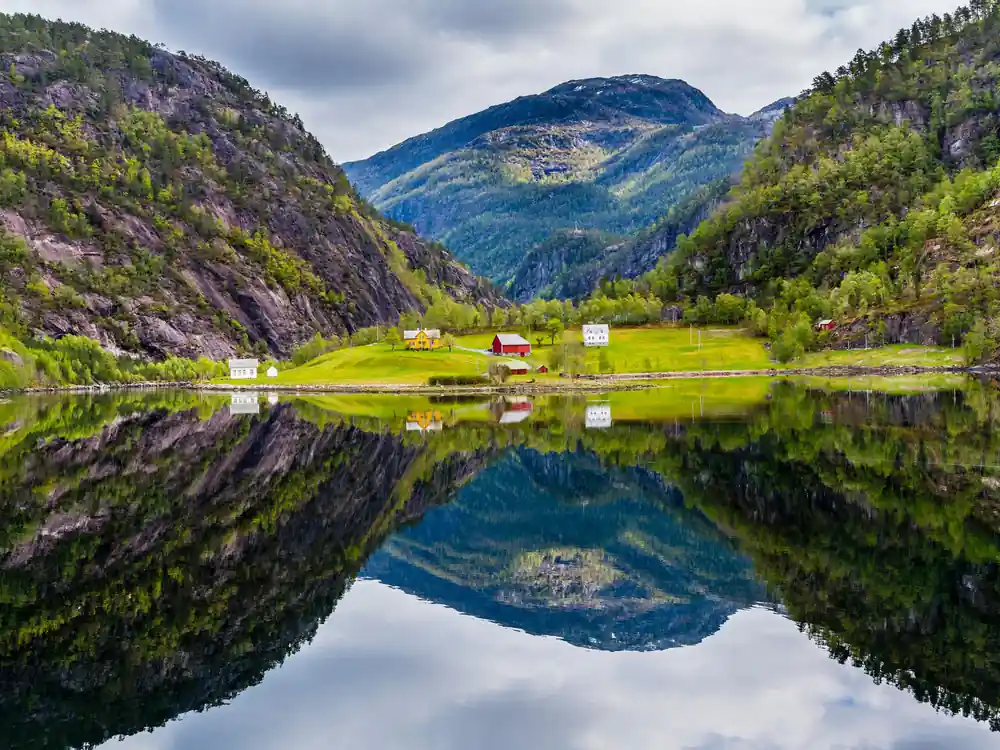
Mostraumen is not a village, a viewpoint or a stop with a car park. It is a gap. The name belongs to the narrow strait where the Osterfjord tightens between rock walls north of Bergen, and in Norwegian place names the ending -straumen marks moving water, a spot where the tide has somewhere to hurry to. Sailing north from the city you leave the harbour behind, pass the timber warehouses of Bryggen, and watch the fjord draw itself in until there is only one line of dark water left between the cliffs.
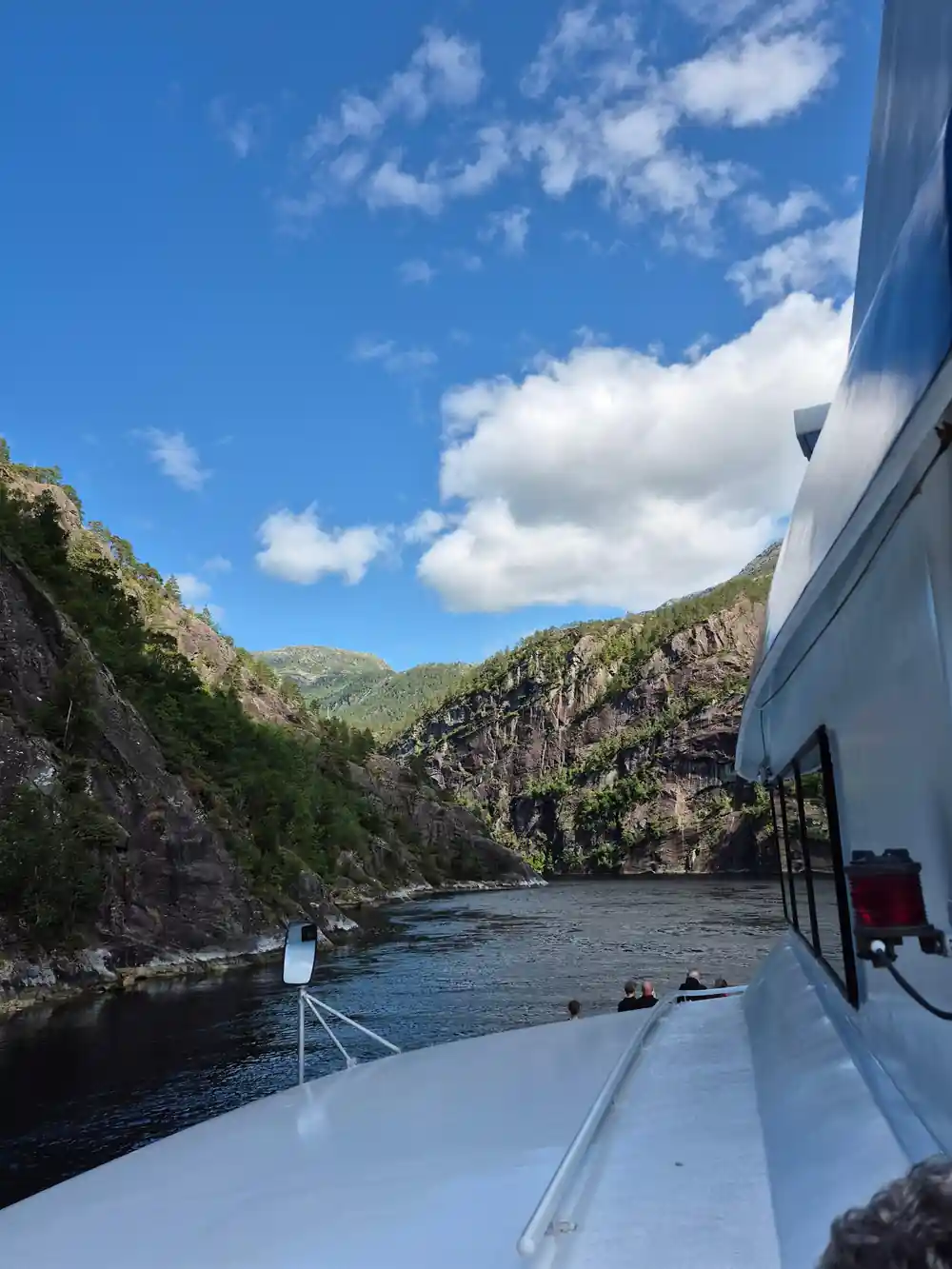
The strait is short. It is a narrow, shallow tidal channel roughly 600 m long and about 50 to 60 m wide at its narrowest, dredged and canalised around 1913 to allow boats through.[1] Strong tidal currents run through it.[1] You feel that more than you see it: the surface wrinkles and folds, the water along the rock seems to be going about its own business, and passengers drift to the rail without being asked. From the deck the whole thing looks less like a channel and more like a doorway.
If you are weighing up trips, the name is a useful clue. This is not a tour of the deep, wide fjords on the posters, with a railway at the end and long coach legs either side. It is a close look at a piece of water that behaves like a river for a short stretch and then hands you back to the fjord. That shape suits a half day, a wet forecast, or a first morning in Norway when you would rather be on the water than on a bus.
Why the water moves so hard
Fjord water is always on the move, sliding up and down the coast with the tide, and a narrow strait is where that movement becomes visible. Water that spreads out across a wide basin has to squeeze through one small opening, so it turns, folds and forms eddies along the sides while the middle runs in a slick. Watch the shoreline as you approach: weed, foam and small debris gather where the flow slackens, and they straighten out again where it runs hard.
Bergen's own tide is moderate rather than extreme: at spring tide the range is about 123 cm, while the mean range is around 91 cm.[3] In narrow straits and harbour approaches around Norway, municipal 5-knot speed limits are common, typically within 150 m of the nearest land.[7] None of that tells you what the water will be doing on your morning out. Watch the strait instead of the clock and let the surface show you the tide.
Timber warehouses and gabled fronts along the Bryggen quay in Bergen.
What you see from the deck
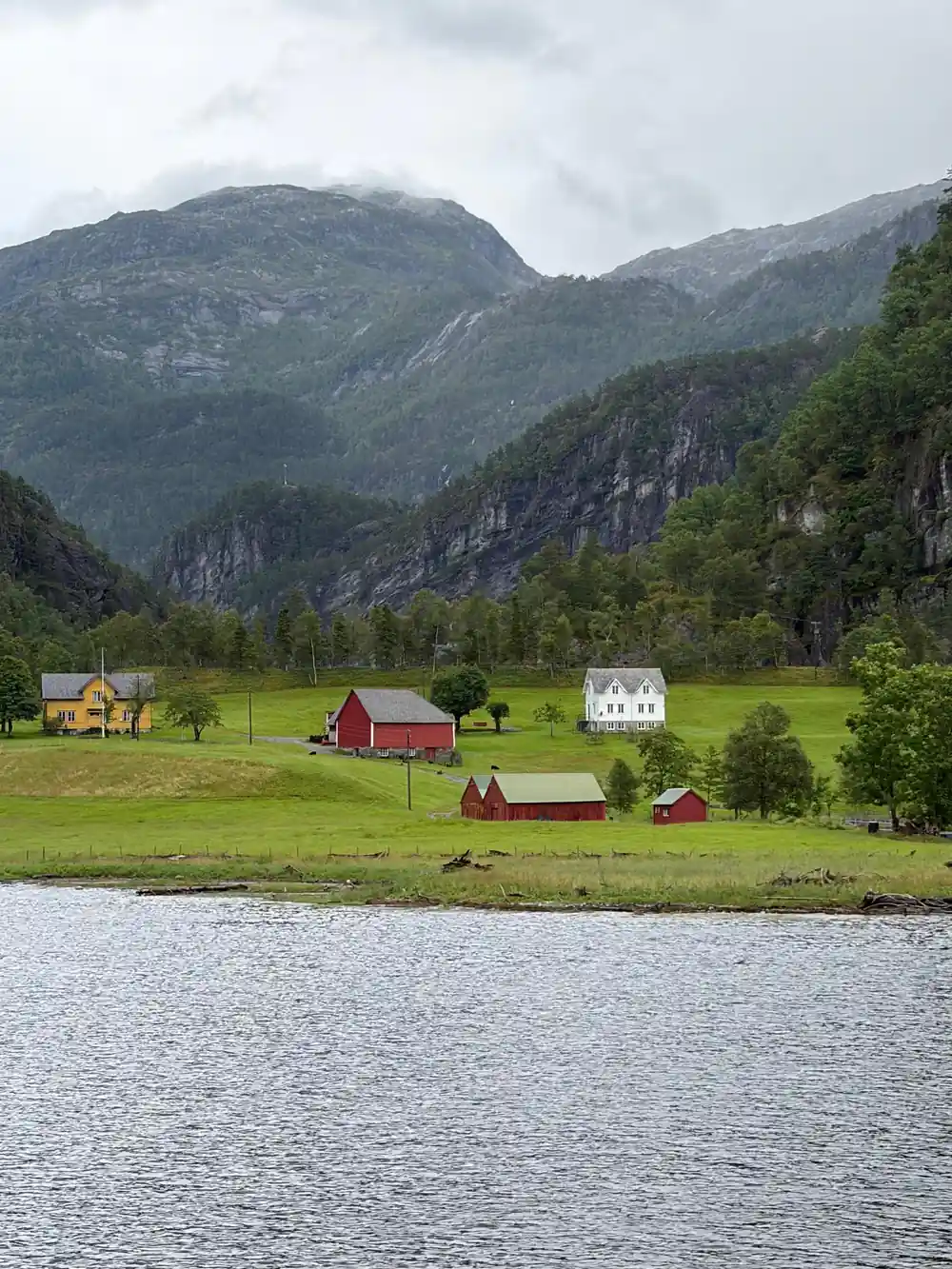
Leaving Bergen, the first landmark is Bryggen, the row of timber warehouses on the quay, inscribed on the World Heritage List in 1979.[8] The original cruise from this site is listed with stops at Bryggen, Osterfjord and Mostraumen.[2] After the city the buildings thin out, the hills steepen, and small farms, boathouses and jetties appear on ledges above the water. Waterfalls drop down wooded cliff faces, some thin as rope, and the boat noses up to one waterfall close enough that crew sometimes scoop mountain water in a cup for passengers.[1]
Expect a wet country. Bergen receives 2,490 mm of precipitation per year, spread over 198 days.[9] Daily mean air temperatures in Bergen range from 1.4°C to 14.5°C across the year, with an annual mean of 7.3°C.[10] Those are city figures, not a forecast for the fjord, and they are the best argument for packing a waterproof shell, a warm mid layer and shoes with grip. On a grey day the cliffs go almost black and the water turns to pewter, which suits the place rather well.
A word on timing and light. Bergen's shortest day is 7.7 hours long on the winter solstice, December 21st, and its longest is 23.1 hours long on the summer solstice, June 21st.[4] Summer sailings have light to spare and the cliffs stay readable well into the evening. When the daylight is scarce, aim for the middle of the day rather than the late afternoon.
The passage itself
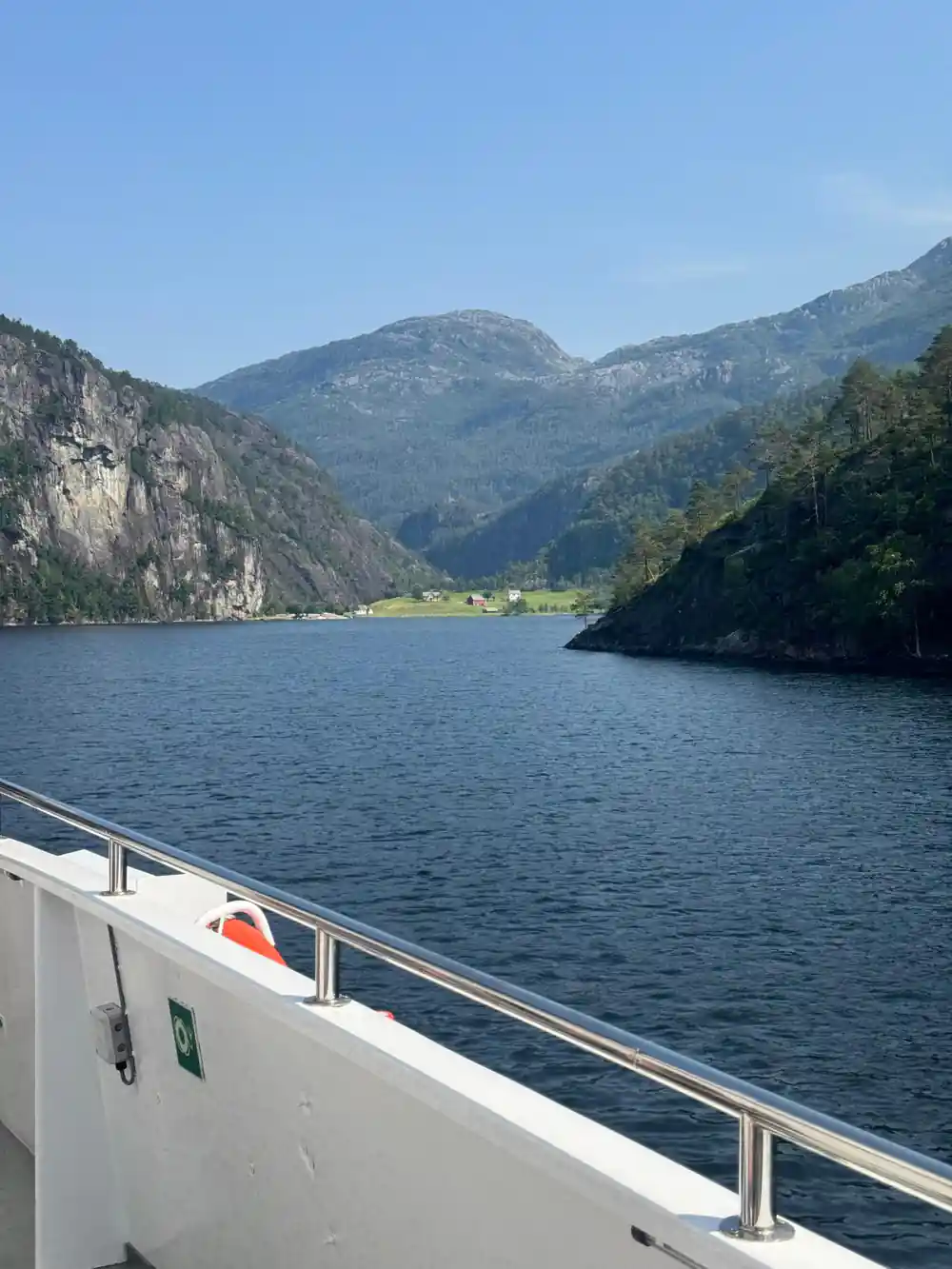
The approach is the enjoyable part. You see the gap from a distance as a notch in a wall of rock, then it widens into a doorway with water running through it, then the boat straightens up and goes in. Keep looking back as well as forward. The best view of the strait is often from the stern, where the fjord opens out again behind you and the cliffs sit in layers, one behind the other, fading with distance.
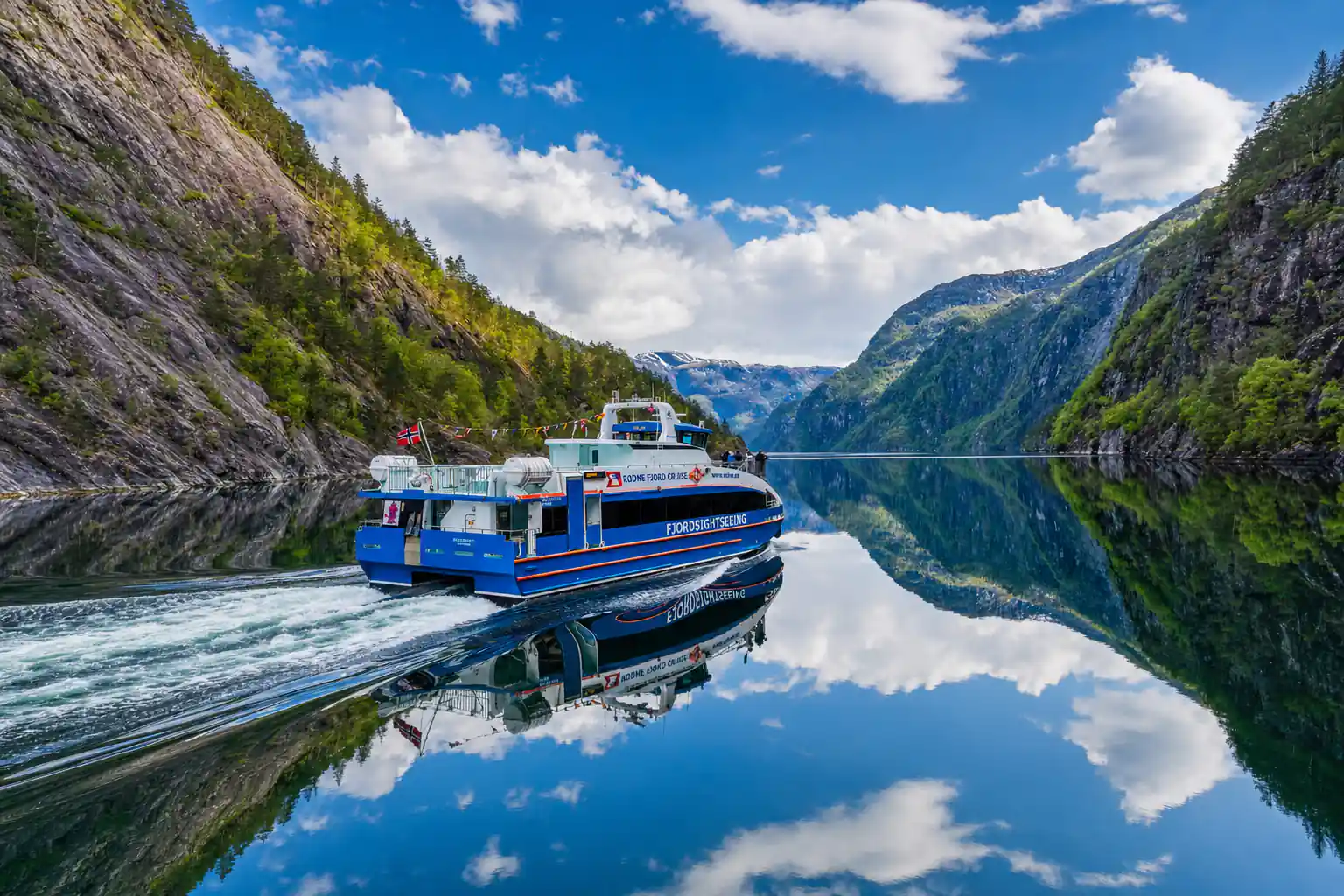
On board, the original cruise includes an audio guide in English and Norwegian.[2] The outing is listed at 3.5 hours, and to see when the boat leaves you check availability for your date.[2] The Bergen to Mostraumen cruise departs from the city side, which means no coach legs and no early start at a bus station. Take the outer deck for the strait itself and go inside when your hands get cold.
Where you stand matters more than any camera setting. The water, the cliffs and the waterfall are close, so a wide view from the open deck beats a zoomed shot through wet glass. Keep one hand free for the rail and leave the tripod in the cabin. If it starts to rain, the strait does not become less interesting: the rock darkens, the falls fatten, and the boat keeps going.
from US$93
From Bergen: The Original Fjord Cruise to Mostraumen takes 3.5 hours and is listed with stops at Bryggen, Osterfjord and Mostraumen.[2]
What lives in the moving water
Moving water is productive water. Where the current stirs the fjord bed and mixes fresh water with salt, small fish gather, and where small fish gather, larger animals follow. Keep an eye on the surface on the way out and the way back. A dark, low, rolling shape that disappears without a splash is usually a porpoise, and the fjord north of Bergen gives them plenty of room.
Norway is home to the largest breeding population of white-tailed sea eagles in Europe, with 2,500 breeding pairs.[11] In Norwegian waters, harbour porpoise abundance is estimated at about 82,600 for the southern component and about 11,000 for the northern component.[12] Neither figure promises you anything on the day, which is exactly why people keep scanning the cliffs. Bring binoculars if you have them, and watch the eddies, where birds work the edge of the flow.
Birds are easier to spot than mammals. Gulls, cormorants and oystercatchers work the shoreline, and a white-tailed eagle is usually seen as a shape on a bare branch or a slow flap across a ridge rather than as a spectacle. Scan the tops of the cliffs and the dead trees along the water. Patience and a pair of binoculars will do more for you than a long lens.
Why the boat turns round at Mostraumen
Mostraumen is a place you look at, not a place you get out at. The strait is a gap in the rock with water running through it, and the day out is built around reaching it, taking it in, and turning for home. Your booking is made from Bergen, and the listing names Bryggen, the Osterfjord and the strait as the stops along the way.[2] The rest is water.
Bergen is a busy port, and the harbour tells you so. In 2024 the city had 631,000 cruise passengers according to Bergen Port's statistics.[13] If your visit lands on a heavy call, the quay will be loud and the streets full, and a sailing that takes you out onto the fjord is a welcome change of scale. On the way back the coffee comes out, the jackets come off, and people start comparing photographs.
If you have the afternoon free, the Fløibanen funicular is a short walk from the quay, and the journey to the summit, 320 m above sea level, takes just six minutes.[14] It pairs well with the cruise: the fjord from water level in the morning, the city and the islands from above later on.
Can the boat always get through?
The channel you sail through is a working passage rather than a natural gap: it was dredged and canalised around 1913 to allow boats through.[1] What that leaves you is a strait with a disciplined middle and a restless edge, where the flow slides along the rock and curls back on itself. The boat's own pace stays modest, and in narrow straits and harbour approaches around Norway, municipal 5-knot zones are common, typically within 150 m of the nearest land.[7]
Depth, current and other traffic all matter to the crew, and you will not be consulted about any of it. What you can control is your timing: check availability to see starting times for your date and build the rest of the day around the sailing.[2] If plans move, free cancellation up to 24 hours in advance applies to the booking, and you can reserve now and pay later.[2]
One last practical note: treat the sailing as the fixed point of the day and let everything else be flexible. Buses, museums and lunch tables all move at their own speed, and a half day on the water is far easier to slot into a busy itinerary than a full day with a coach.
Daily mean air temperature in Bergen
Daily mean air temperatures for Bergen, giving the coolest month, the annual mean and the warmest month.[10]
Mostraumen cruise prices from Bergen
From-prices in US dollars, as listed, for the Mostraumen cruises.[2][5][6][15]
When to book the Bergen Mostraumen fjord cruise
Plan your Mostraumen day
Pick a sailing time
Morning departures leave the afternoon free, while later ones give softer light. Check availability for starting times on your date.
Walk to the quay
The cruise starts from the city side at Bryggen, so you can walk from most central hotels. Arrive early and find the right berth.
Dress for wet air
A waterproof shell, a warm mid layer, and shoes with grip. Rain is normal here, and the deck stays wet even when the sky does not open.
Claim a rail spot
The strait is short, so choose where you want to stand before the boat reaches it. The open deck is best, and the rail gets you closest.
Watch the water
Look for foam lines, eddies and birds working the current. Keep an eye out for porpoises, and hold the rail while you photograph.
Mostraumen Fjord: book the original cruise from Bergen
from US$94Reserve now & pay later