The main points
- A catamaran with a wide deck and room to move, built for the sheltered water inside Osterfjord and the squeeze at Mostraumen.
- It runs from Bryggen out through Osterfjord to Mostraumen, with the narrows at the far end of the trip.[1]
- About 3.5 hours from the city wharf, with starting times shown when you check availability.[1]
- An audio guide is included in English and Norwegian, so you can follow the landmarks as they pass.[1]
- From US$93, with reserve now and pay later and free cancellation up to 24 hours in advance.[1]
- Top choice Original Mostraumen cruise from US$93 Duration3.5 hours[1]Rating4.69 from 9,652 reviews[1]GuideAudio guide: English, Norwegian[1]StopsBryggen, Osterfjord, Mostraumen[1]CancellationFree cancellation up to 24 hours[1] Check availability
- Local operator cruise from US$88 Duration3.5 hours[2]Rating4.57 from 4,302 reviews[2]GuideDriver: English[2]Stopsvia Nordhordland Bridge[2]CancellationFree cancellation up to 24 hours[2] See this tour
- Cruise with live guide from US$80 Duration3.5 hours[3]Rating4.74 from 2,368 reviews[3]GuideLive guide: English[3]StopsBryggen, Osterfjord, Modalen[3]CancellationFree cancellation up to 24 hours[3] See this tour
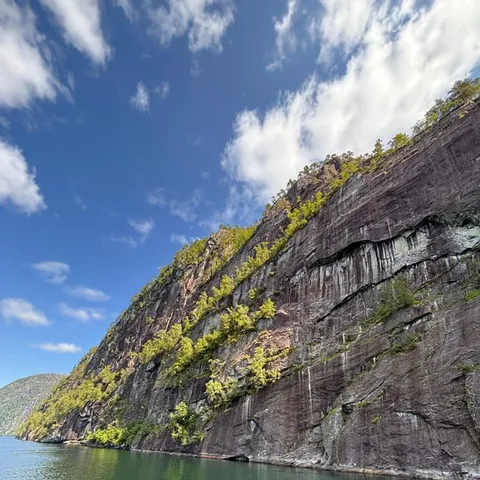
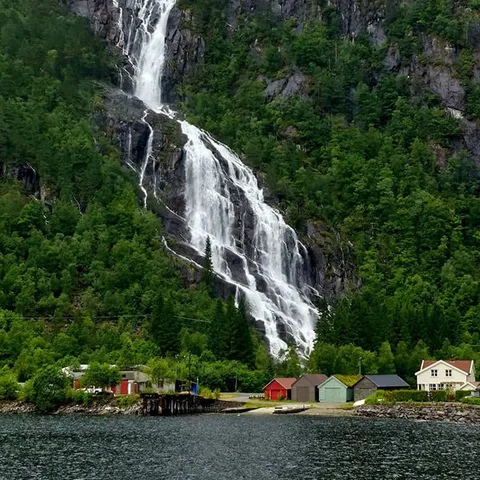
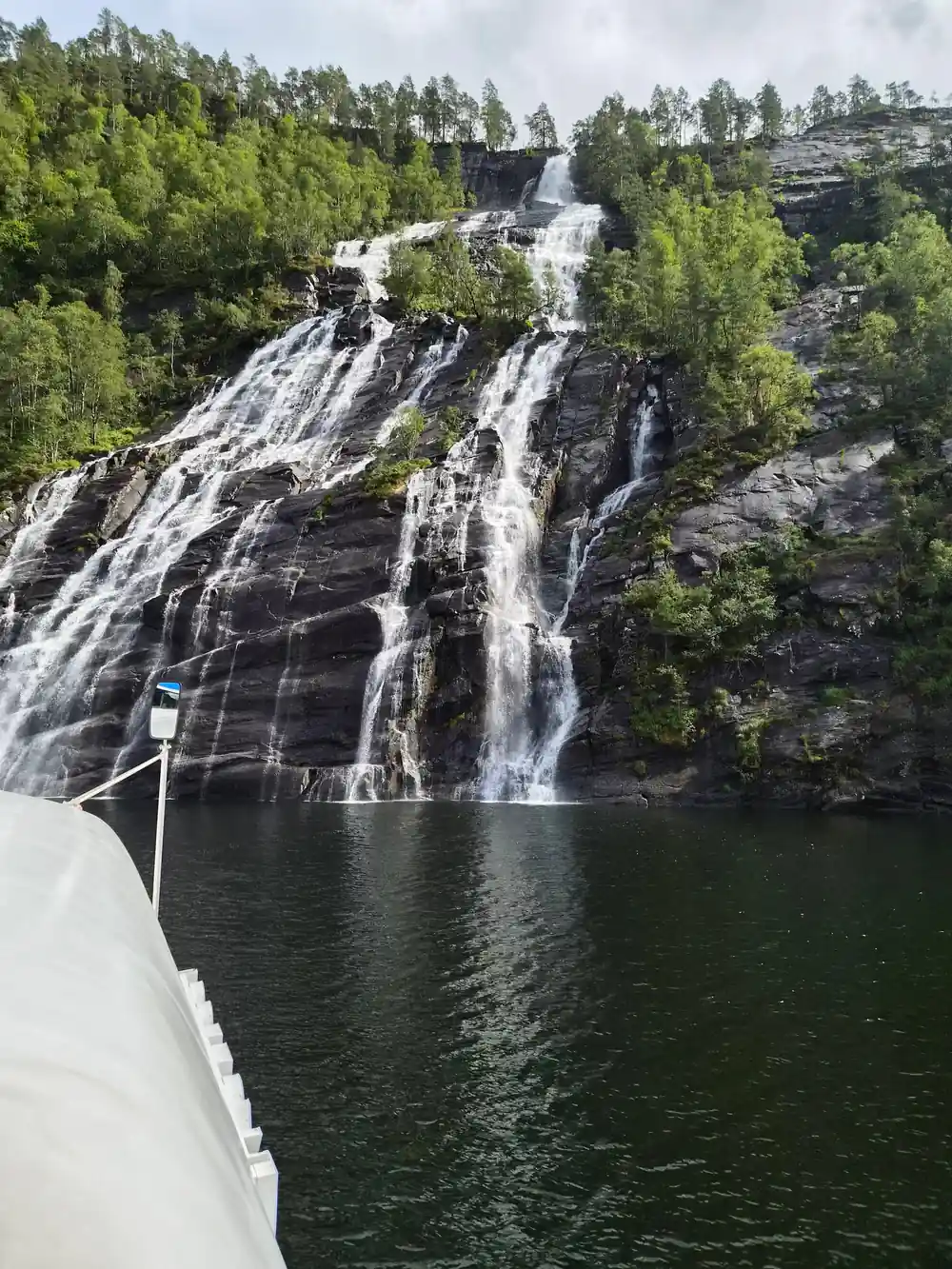
Strong tidal currents run through the strait, and the boat noses up to a waterfall close enough that crew sometimes scoop mountain water in a cup for passengers.
The verdict: a steady, close-up way to see the fjord
Before you sail
On board
- Sunglasses and a cap for the glare off the water, even on a cloudy day
- A warm mid layer: Bergen daily means run from 1.4°C to 14.5°C across the year[4]
- Travel light, and keep your bag somewhere you can reach a waterproof easily
- Three and a half hours out and back, with starting times that change by date[1]
Why a catamaran suits the Mostraumen run
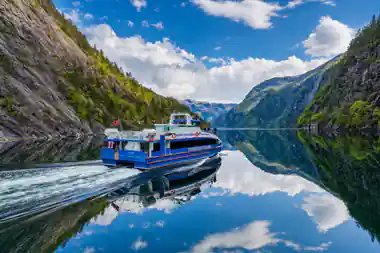
Mostraumen is the reason the boat is built the way it is. The strait is a narrow, shallow tidal channel roughly 600 m long and about 50 to 60 m wide at its narrowest, dredged and canalised around 1913 to let boats through, and strong tidal currents run inside it.[5] A twin-hulled catamaran takes that kind of water in its stride. Two hulls give a wide, stable platform, so the boat stays level while you stand at the rail rather than rolling you off your feet. The beam also lets it work into tight corners without fuss, and that is how the cliffs end up close enough to read.
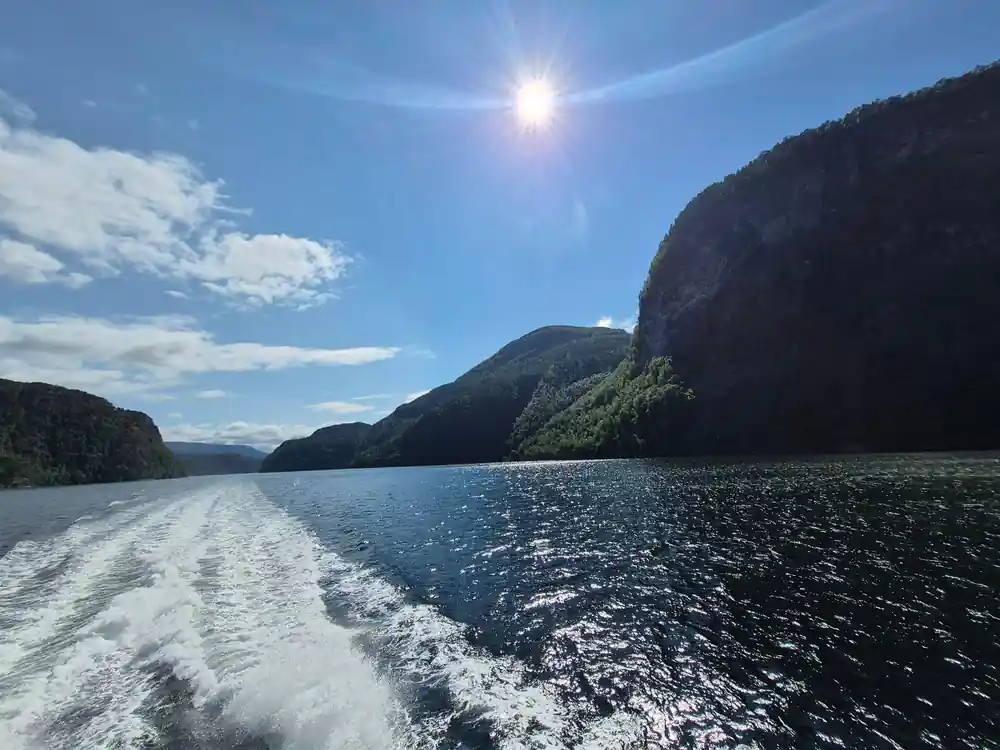
This route is about slow, close-in cruising rather than distance covered. In Norway, a 5-knot speed limit is commonly set within 150 meters of shore, including in narrow straits and harbour approaches[6], and the wooded slopes of Osterfjord come past at a pace that lets you pick out farms, boats and waterfalls. The boat can edge towards the rock instead of sweeping past it. If you have only ever crossed a fjord on a car ferry, this feels different: the point is the water you are on, not the kilometres behind you.
On deck: what you actually see from the rail
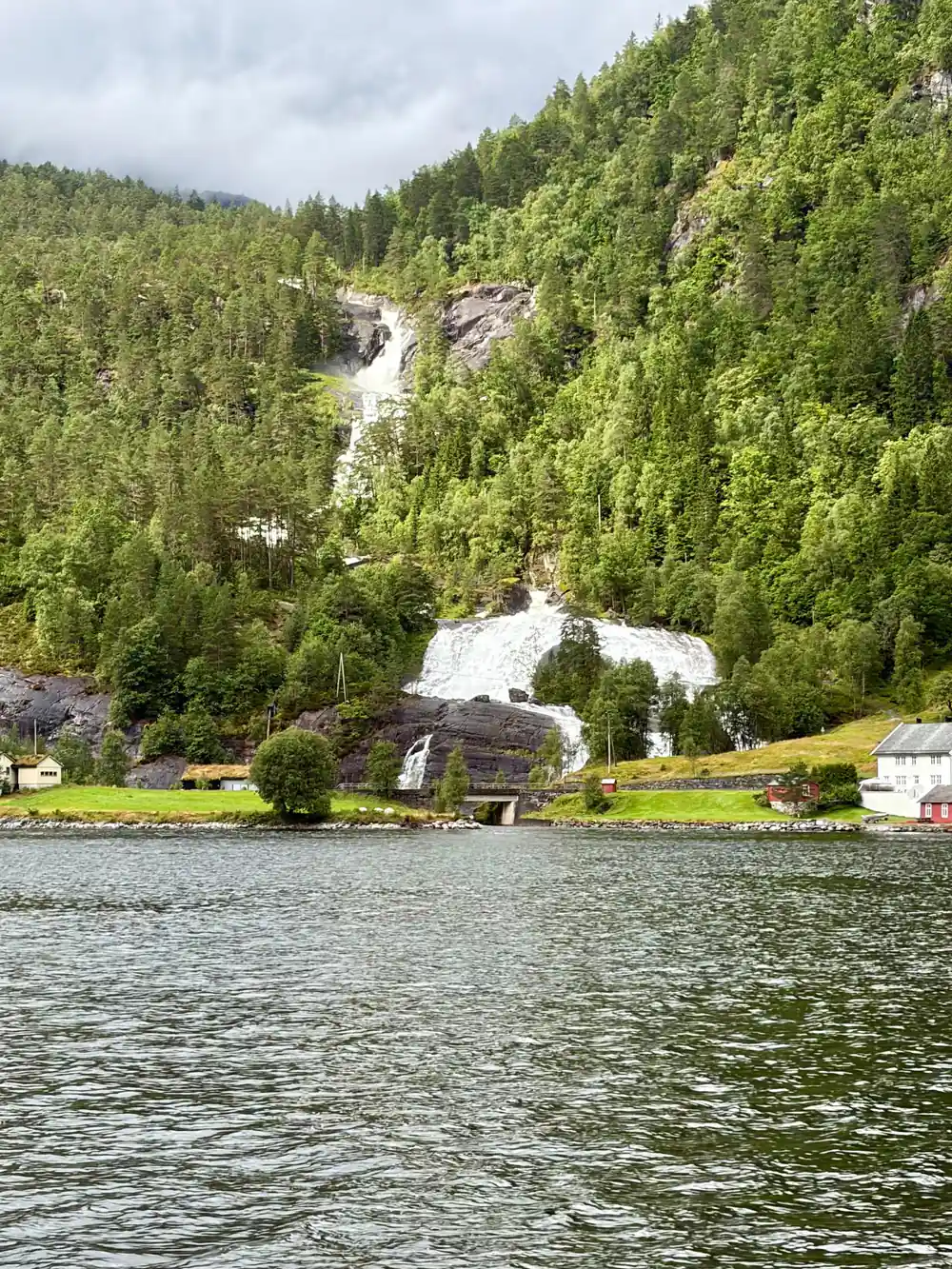
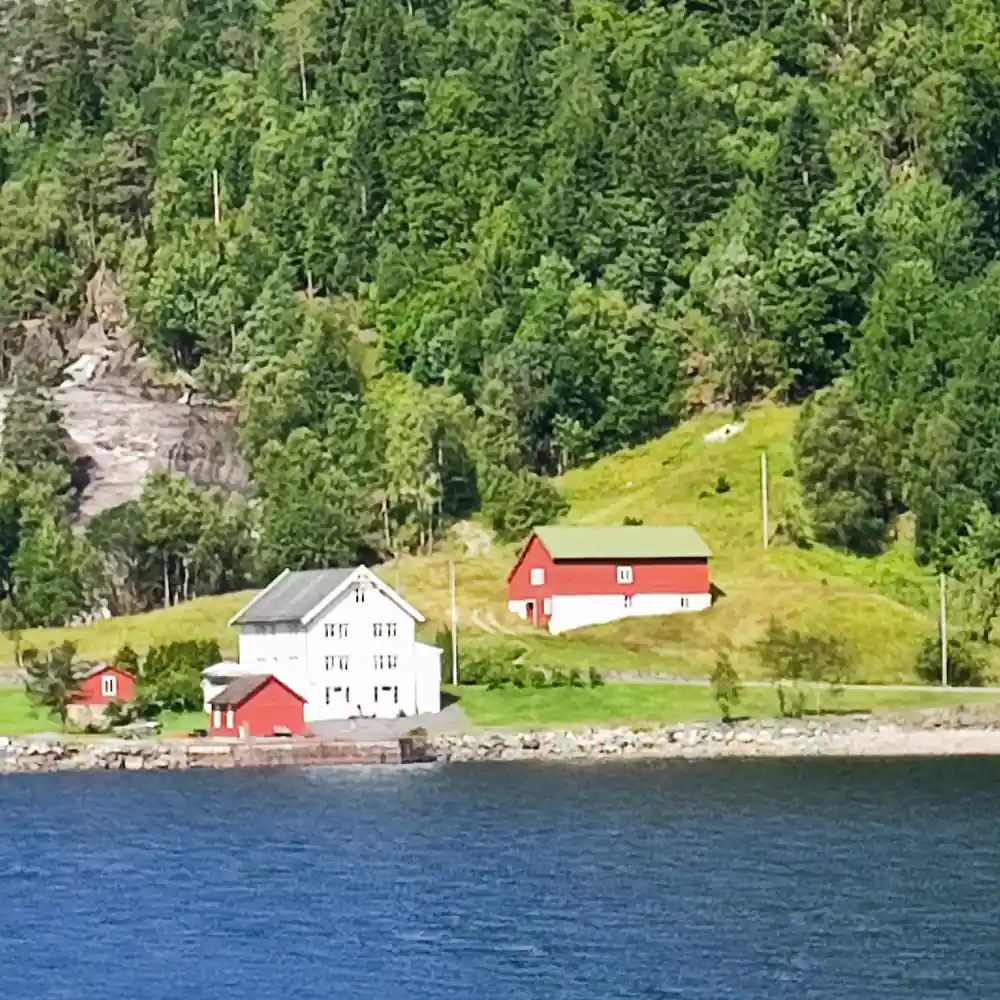
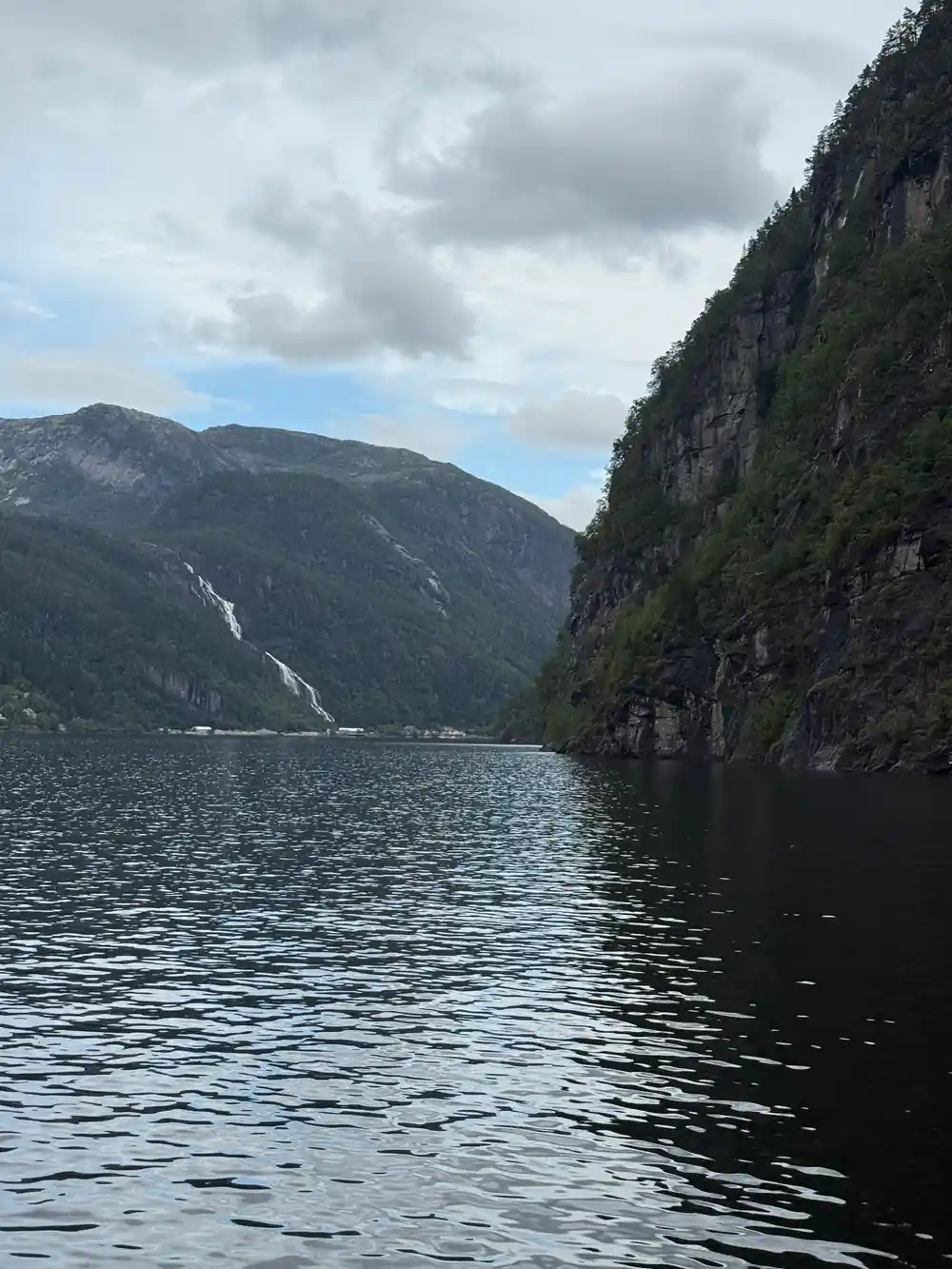
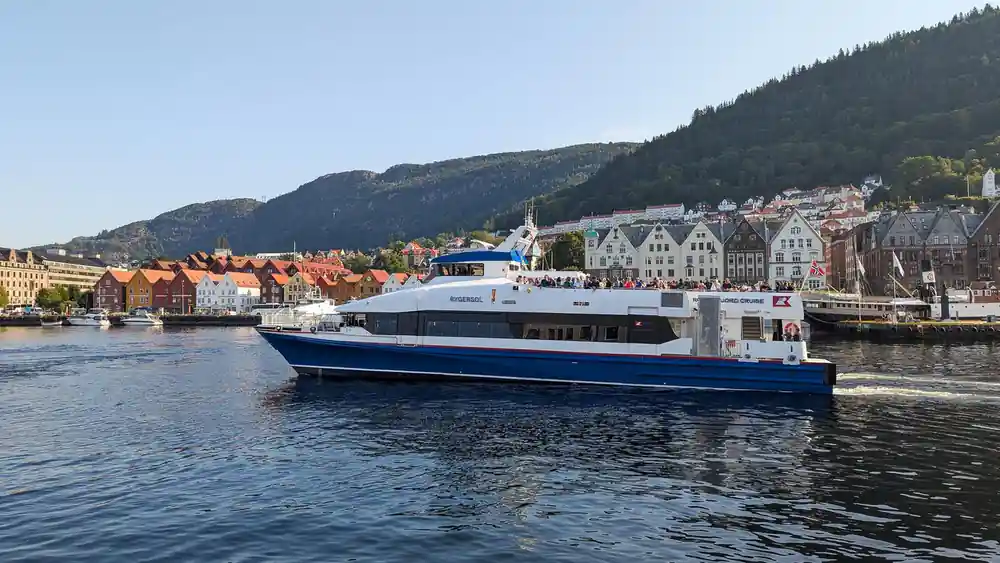
The route runs from Bryggen out through Osterfjord and on to Mostraumen[1]. From the deck, the first stretch is the busiest: timber warehouses, the old wharf, other boats coming and going, and the city dropping away behind you. Then the fjord narrows and the sides steepen, with grey rock, birch and pine running down to the waterline and the occasional small farm or boathouse tucked in where the land flattens. Waterfalls show up as pale threads on the cliff, louder as you get closer, and the boat slows to let you look.
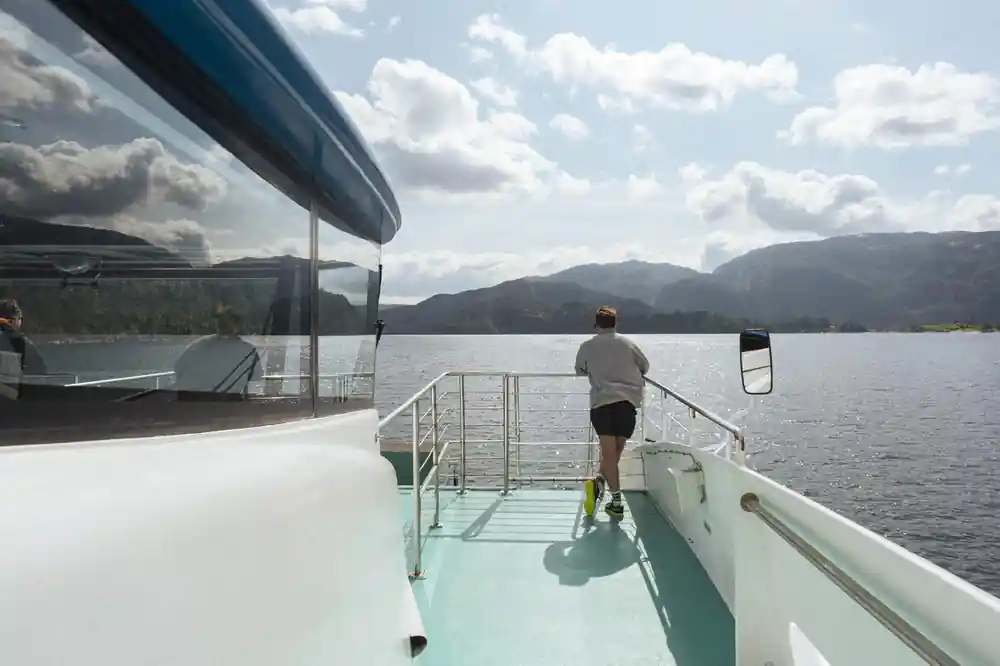
Where you stand changes what you get. The open deck gives you the full sweep of sky and cliff and the smell of cold water, and it is the place for photographs, though you will want a hand free for the rail. Inside, behind glass, you stay dry and out of the wind and still see both sides of the fjord sliding past. My own habit is to start outside, retreat in when the rain arrives, and go back out when the boat turns for home. Late in the day the cliffs go soft and the water turns silver.
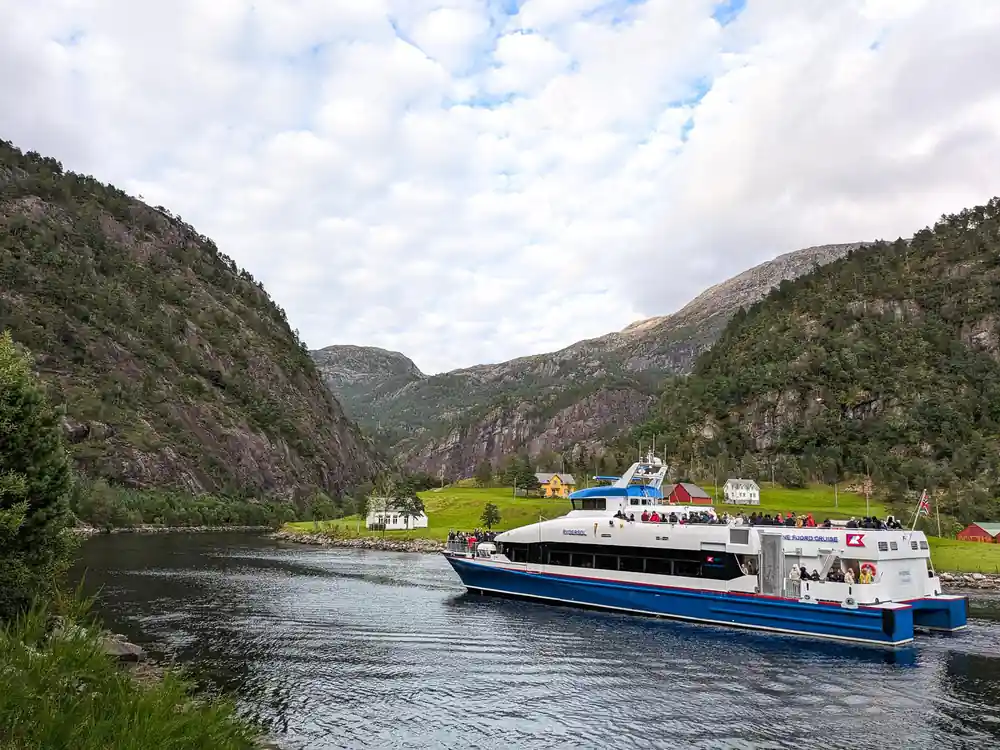
Guests on the open deck as the boat works along the cliff wall in Osterfjord.
The cabin, the windows and the weather
Bergen is a wet city, so plan for rain rather than hoping around it. The city receives 2,490 mm of precipitation a year, spread over 198 days[7], and a good share of that arrives sideways on a fjord. A waterproof shell with a hood beats an umbrella, which is useless on an open deck and awkward in a crowd. Add a warm mid layer, gloves in winter, and shoes with a grip on wet metal. If you run cold, bring a hat, because wind on the water is the part people underestimate.
Windows matter more than you might think on a day like that. Sitting inside with a mug of something hot and the whole fjord framed in glass is a perfectly good way to spend three and a half hours, and you can move from side to side as the view changes. Water inside Osterfjord is sheltered for most of the run, so even a grey day usually gives you a dry spell at the rail. Take it when it comes.
Low-emission cruising and quieter water
Norway has been rebuilding its fjord fleet, with battery and hybrid boats replacing older diesel vessels on many routes. On board, the change is mostly one of sound and smell: a quiet drive leaves you listening to the wake, the gulls and a waterfall rather than an engine, and the air on deck stays clean. It also makes slow, close-in cruising pleasant instead of noisy. If low-emission travel is part of why you are here, it is a fair question to put to the operator when you book.
The water itself does a lot of the work on this route. Bergen's tidal range is about 91 cm on a mean tide and about 123 cm at spring tide[8], so the shoreline you see is never quite the same twice, and the strait at the far end is a channel where strong tidal currents run[5]. Rockweed, seabirds and the tideline all shift with the water level, and on a low tide you will see more bare rock than you expect. None of this is scenery you can rush.
from US$93
The Original Fjord Cruise leaves Bryggen, runs out through Osterfjord to the narrow strait, and returns in three and a half hours.[1]
Food, drink and comfort on board
Eat before you sail. Bryggen, where the boat leaves from, was inscribed on the World Heritage List in 1979[9], and it is also where the city's cafes and bakeries cluster, so a late breakfast or an early lunch fits neatly before a departure. Take a water bottle and something small to eat in your bag, particularly if you are travelling with children. Ginger sweets are a cheap remedy if you are prone to queasiness, though the sheltered water inside the fjord is usually kind.
The cruise takes about 3.5 hours[1] and returns to the same wharf, so you are not trailing bags around all day. Booking is flexible: you can reserve now and pay later, and free cancellation up to 24 hours in advance gives you a full refund[1]. Mostraumen cruises from Bergen start at different prices depending on the boat and the setup, from US$80[3] and from US$88[2] on other listings, and from US$93 on this one[1], with a faster RIB version from US$156[10].
Audio guide, crew and the wildlife to watch for
An audio guide is included in English and Norwegian[1], which is a help on a route where the interesting things are not always obvious: a channel marker, a fish farm, the point where the fjord bends into the strait. Listen for a while, then take the earpiece out and just look. The crew are on hand for questions, and on a small boat you can usually get an answer without queuing.
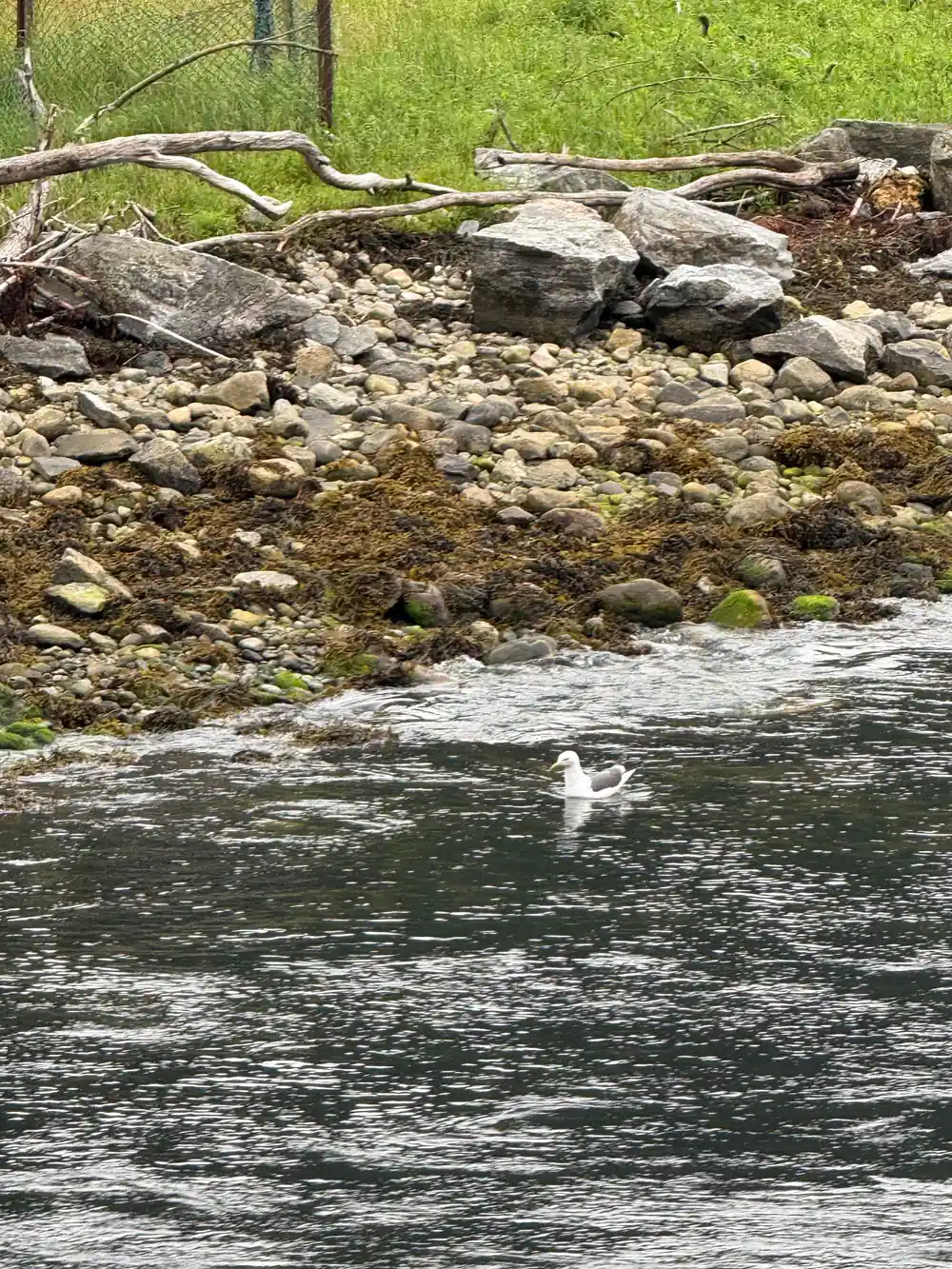
Keep your eyes on the cliffs and the water. Norway holds the largest breeding population of white-tailed sea eagles in Europe, with 2,500 breeding pairs[11], and a sea eagle lifting off a pine at eye level is a fine sight. Harbour porpoise are harder to catch, with abundance in Norwegian waters estimated at about 82,600 in the southern component and about 11,000 in the northern one[12]; they show as a brief dark back and a puff of breath. Binoculars earn their place in your bag here.
Season, light and making a day of it
The light is the variable you can plan around. Bergen's shortest day is 7.7 hours long on the winter solstice, December 21st, and its longest is 23.1 hours on the summer solstice, June 21st[13]. That spread shapes the trip you book: a midsummer sailing and a midwinter one are different experiences, and the light you get is the main reason why. Daily mean air temperatures across the year run from 1.4°C to 14.5°C, with an annual mean of 7.3°C[4], so the same boat feels like two different trips depending on the month you choose.
Bergen had 631,000 cruise passengers in 2024[14]. Check starting times for your date, and book ahead if you are travelling in the busy months. If you have a spare afternoon, the Floibanen funicular reaches a summit 320 m above sea level in just six minutes[15] for a view down over the wharves you sailed from. Pair the two and you have seen the fjord from the water and from above, which is a good day in Bergen by any standard.
Mostraumen cruises from Bergen: from-prices in US dollars
Mostraumen boats from Bergen: from-prices per person
From-prices per person in US dollars for each listing.[1][2][3][10]
When to take the boat out
Plan the crossing
Choose a departure
Check availability for your date before you commit, as starting times vary through the year.[1]
Walk to Bryggen
The boat leaves from the old wharf, so arrive early and use the wait to look at the timber warehouses.
Dress for both
Layers, a waterproof shell and flat shoes: Bergen gets 2,490 mm of rain over 198 days a year.[7]
Find your spot
Outside for the first stretch, inside when the rain comes, then back out for the narrow strait at the far end.
Look up and listen
The audio guide runs in English and Norwegian, and cliffs, waterfalls and seabirds are the real commentary.[1]
Ready for narrow water? Book the Original Fjord Cruise to Mostraumen.
from US$94Reserve now & pay later